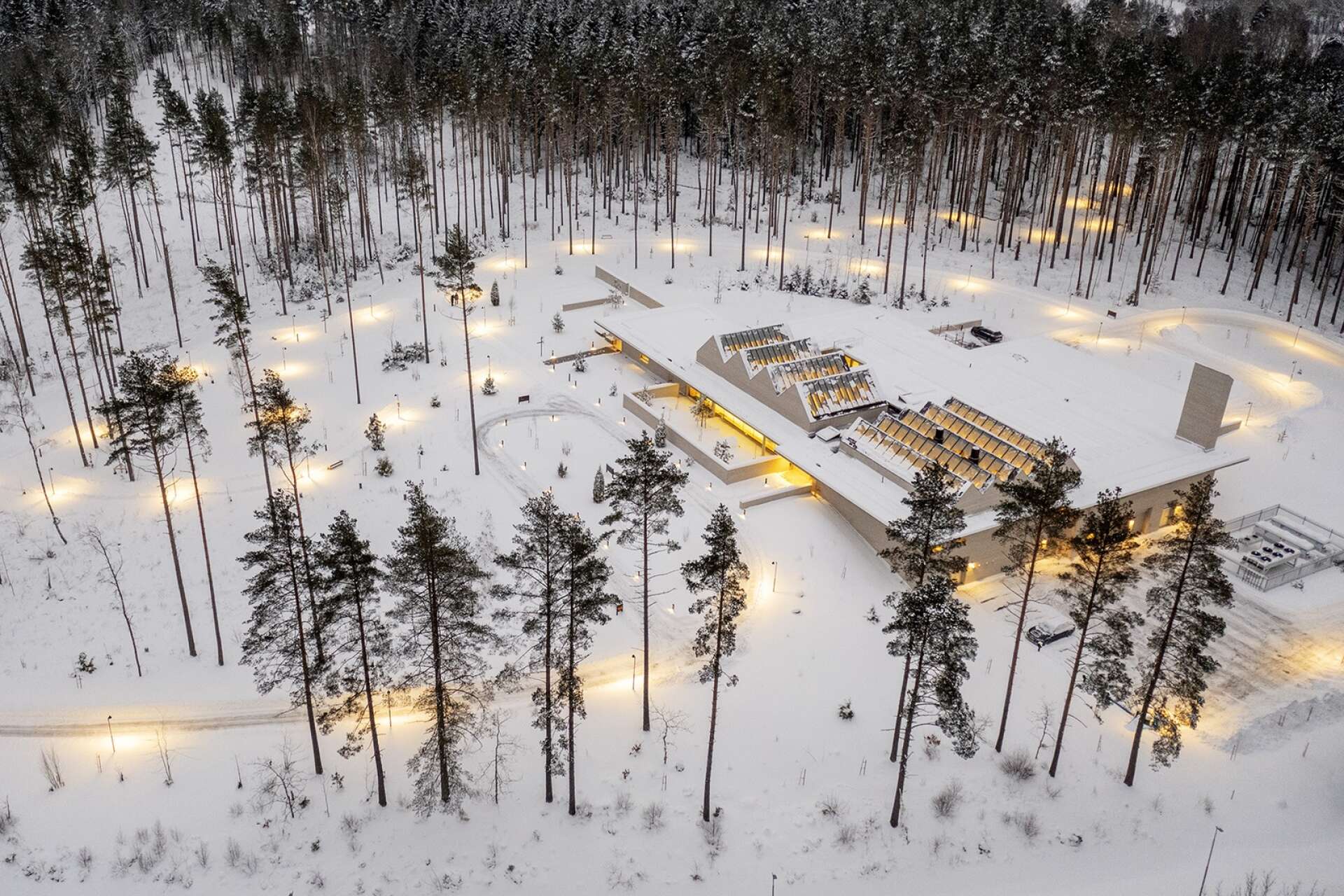
The new crematorium at St. Sigfrid’s Cemetery is the result of several years of planning and construction. Those involved have described it as one of the most significant and rewarding projects they have undertaken, with a strong focus on creating a dignified environment for both bereaved families and staff.
Electricity instead of gas
The most significant technological innovation in Skövde is its choice of energy source. Traditionally, Swedish crematoria have been powered by fossil gas or oil. At the new Forest Crematorium, however, cremations are carried out using electrically heated cremation furnaces.
Completely fossil-free: By using renewable electricity and bio-oil as a backup system, the entire process operates without fossil fuel emissions.
Energy recovery: Excess heat generated during the cremation process is recovered and used to heat both the crematorium itself and other buildings within the cemetery.
State-of-the-art emissions control: The facility is equipped with the latest flue gas cleaning technology to minimise its environmental impact.
Architecture in harmony with the forest
The innovation extends beyond the technology. Designed by White Arkitekter, the building has been carefully integrated into its woodland surroundings to minimise its environmental footprint. Its dark timber façade and generous natural lighting create a bright and calming working environment—something often lacking in older, more enclosed crematorium buildings.
“We wanted to create a building that feels warm and welcoming, even though it is a highly technical facility. It is about showing respect for both the deceased and the environment,” White Arkitekter wrote in a press release.
A model for the rest of the country
The need for a new crematorium in Skövde had become increasingly urgent, as the previous facility from the 1950s no longer met modern environmental or workplace standards. Following its commissioning in March 2026, the Church of Sweden in Skövde hopes the new facility will serve as a model for other municipalities facing similar investments.
For local residents, the new crematorium makes it possible to offer a final farewell that meets today’s high environmental standards without compromising the dignity of the ceremony.
How fossil-free cremation works
The primary difference between a traditional crematorium and a fossil-free one lies in the choice of energy source and the way heat is generated.
Electric cremation furnaces: Instead of burners fuelled by fossil gas or oil, powerful electric heating elements generate the temperatures required for cremation (approximately 800–1,100°C / 1,470–2,010°F).
Renewable electricity and bio-oil: Electricity from renewable sources enables fossil-free day-to-day operation. In the event of a power outage, HVO (hydrotreated vegetable oil) is commonly used as a backup instead of conventional heating oil.
Greater energy efficiency: Electric furnaces are generally easier to insulate and control with precision, reducing energy losses compared with older gas-fired systems.
Heat recovery: Heat generated during the cremation process passes through heat exchangers. In Skövde, this recovered energy is used to heat buildings and contribute to the local district heating network, creating a circular energy system.
Environmental benefits: In addition to eliminating fossil fuel carbon emissions, modern crematoria are equipped with advanced flue gas cleaning systems that effectively remove particulate matter and heavy metals such as mercury.
Update (22 July 2026)
Skövde is not the only Swedish crematorium to invest in electric cremation technology. In November 2025, the Skogsäng Crematorium in Oskarshamn was inaugurated. According to the Church of Sweden, it features Europe’s first Swedish-built electric cremation furnace. Unlike the furnaces in Skövde, the Oskarshamn furnace is a hybrid design that retains a conventional burner alongside its electric heating elements.
Which facility can most accurately be described as “Sweden’s first fossil-free crematorium” therefore depends on how fossil-free operation is defined and which technical solution is being considered—something that has not always been made entirely clear in the industry’s own press releases.
Read our article about the Oskarshamn crematorium for more details.