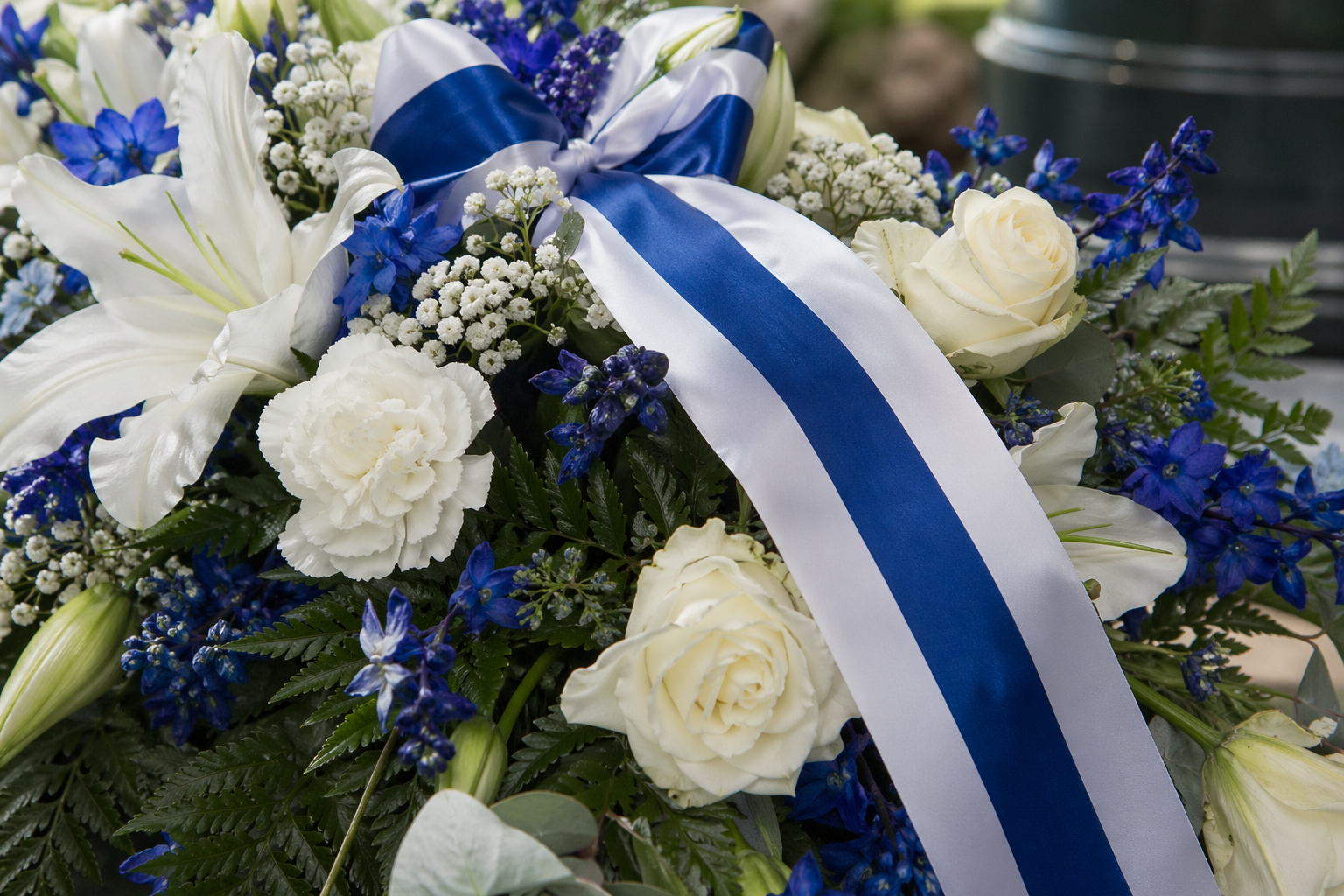
Funeral flowers have long been part of the way families honour someone who has died. Wreaths, bouquets and arrangements placed beside the coffin can express feelings that are difficult to put into words.
But in parts of Finland, florists say that the demand for traditional funeral flowers is changing.
Finnish public broadcaster Yle reported in January 2026 that smaller ceremonies and changing preferences were affecting flower shops in eastern Finland.
A flower shop closes in Kaavi
In the small municipality of Kaavi, a flower shop has closed. Changes in funeral customs were cited as one of the reasons behind the decision.
In nearby Kuopio, florist Armi Tirkkonen, who has worked in the flower trade since the 1980s, told Yle that smaller floral arrangements have become more common in connection with cremation.
She also emphasised that flowers can remain meaningful regardless of whether a person is buried or cremated. Their purpose, in her view, is to honour the deceased.
The change is therefore not necessarily about abandoning flowers altogether. It can also be about choosing different arrangements and quantities.
Funerals with fewer than 20 guests
Funeral director Sami Länsivuori in Kuopio described another shift: funerals attended by fewer than 20 people have become the most common in his experience.
He linked the development partly to the Covid-19 pandemic, when restrictions encouraged smaller gatherings. Some of those habits appear to have continued after restrictions ended.
Länsivuori also reported that more than 70 per cent of funerals in Kuopio involve cremation.
Cremation does not, in itself, mean that a ceremony must be small or that fewer flowers will be used. But changing preferences about ceremonies, gatherings and memorial arrangements can influence the choices families make.
The debate over a single flower
Concerns about funeral flowers had already emerged in Finland before the latest report.
In April 2024, Yle described a debate among florists about the practice of replacing larger floral tributes with a single flower.
Representatives of the Finnish florists' association questioned what they perceived as encouragement to limit funeral flowers.
Several parishes disputed the suggestion that clergy generally directed families to use fewer flowers, stressing that the decision belongs to the bereaved.
The debate highlighted different views about the role of flowers in modern funerals.
When traditions change, businesses feel the effects
For a florist, a large funeral wreath and a single rose represent very different orders.
A reduction in demand for traditional arrangements can affect revenue, specialist craftsmanship and the viability of smaller shops.
There may be several reasons why funeral customs change, including cost, personal preferences, family circumstances and local traditions.
Yle's reporting provides concrete examples of how individual businesses are affected. It does not establish that florists throughout Finland, or across the Nordic countries, are experiencing identical changes.
Finding new ways to say goodbye
Funeral traditions evolve. Families may choose smaller gatherings, simpler arrangements or different ways of expressing remembrance.
For the florists interviewed in Finland, these changes are already influencing their work.
For bereaved families, the central question remains how best to honour the person who has died.
The forms may change, but the need for a personal and meaningful farewell remains.