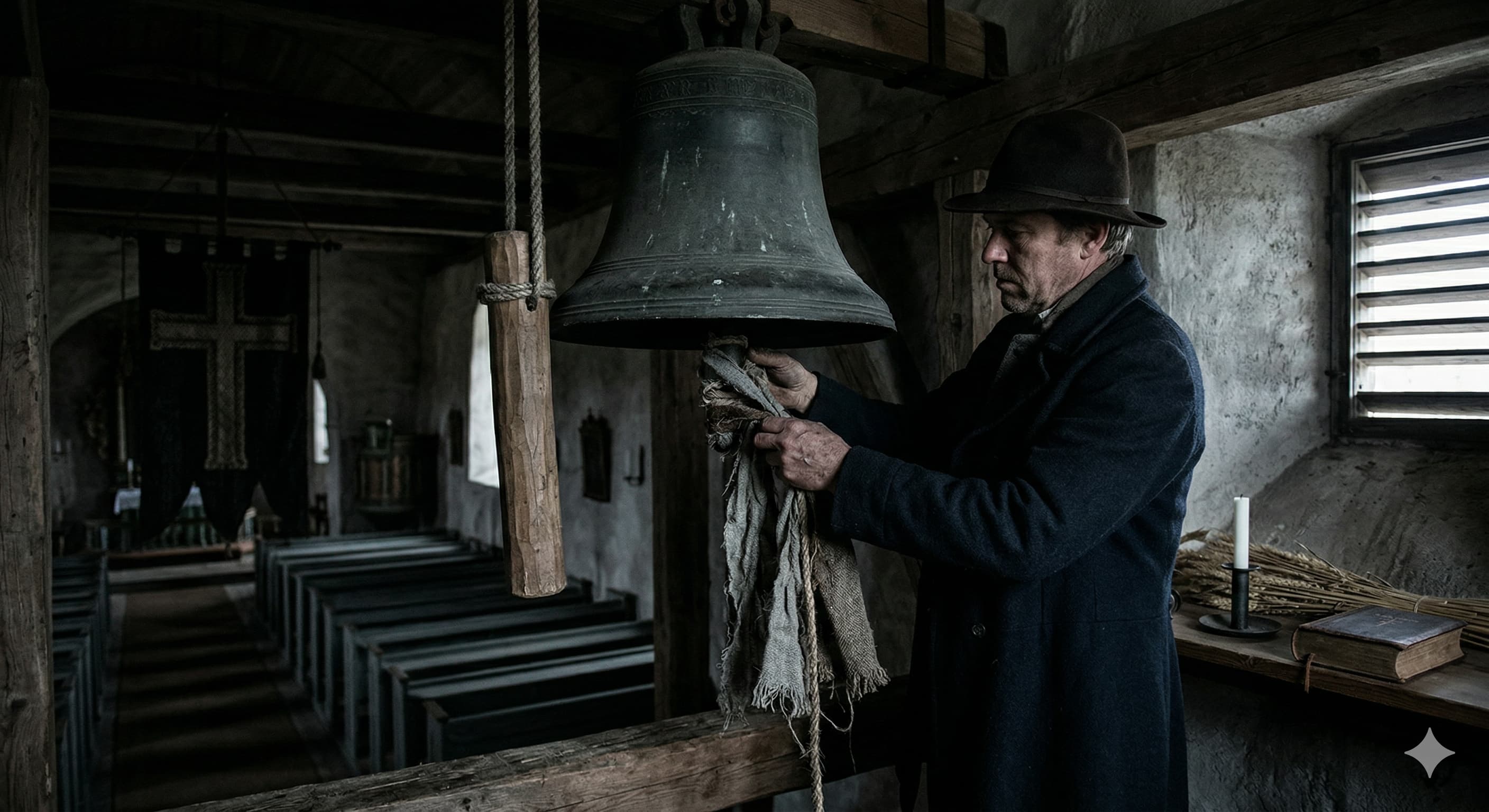
Imagine a Swedish village several hundred years ago. The church bells, normally heard across farms and fields, had fallen silent. Work had slowed, and households were preparing for the most solemn days of the year.
It was Holy Week, the days before Easter, when the story of Christ's suffering and death was expected to reach far beyond the church walls.
Today, many people associate Easter with time off, good food and family gatherings. In earlier times, however, the days leading up to Easter were also marked by restraint, religious solemnity and numerous beliefs about what people should – and, above all, should not – do.
One of the most noticeable changes was something everyone could hear. Or rather, could no longer hear.
When the sound of the bells changed
The Wednesday before Easter is known in Sweden as dymmelonsdag. The name comes from the wooden clappers, called dymlar, that could once replace the metal clappers inside church bells. Their clear, powerful ringing was transformed into a dull, muted sound.
The custom had a long history. During the Middle Ages, church bells in Sweden were not rung at all during the Easter period of silence. In the sixteenth century, wooden clappers began to be used instead, allowing churches to summon worshippers without the usual ringing.
It was a change that made the solemnity of the occasion audible. The bells remained in place and could still be rung, but their sound was no longer the same.
The stillness was also meant to influence people's work. According to traditional folk beliefs, tasks involving spinning or circular movement were to be avoided. Spinning yarn and grinding grain were among the activities considered inappropriate in some parts of the country.
Such activities were known as kringgärningar, or circular tasks. Their rotating movements were associated with Christ's suffering, and people believed that performing them could intensify his pain.
How strictly these customs were observed varied between regions and historical periods. Nevertheless, they reveal how religious beliefs could influence even the most ordinary household chores.
Good Friday was meant to feel long
If Holy Wednesday marked the beginning of Easter's solemn silence, Good Friday was its most serious day.
In Christian tradition, it commemorates the crucifixion and death of Jesus. In older Swedish customs, this was reflected in quietness and restraint. Work and entertainment were limited, and in many households even children were expected to remain calm.
It was not supposed to be an ordinary day.
Religious mourning found expression in everyday life. Meals could be simple, and ordinary activities were set aside. It was not a time for celebrations, but for reflection and remembrance of suffering and death.
Customs nevertheless differed between regions and generations. There was no single set of traditions followed in exactly the same way throughout Sweden.
What united them was the belief that Good Friday should stand apart from everyday life. The solemnity of the Christian story was not confined to the church service; it was also felt at home.
When folklore entered the Easter night
Alongside the Church's traditions, a rich body of folklore surrounded Easter.
In many places, church bells were believed to keep evil forces and supernatural beings at bay. When the bells fell silent or their ringing was muffled, that silence therefore carried another meaning in popular imagination.
Maundy Thursday and the night before Good Friday were particularly associated in Swedish folklore with witches and supernatural powers. Stories of witches travelling to Blåkulla, a legendary gathering place, remain among the best-known expressions of these beliefs.
To protect their homes and livestock, people used various protective objects and symbols. Folklore archives contain accounts of tar crosses and objects made of iron or steel, which were believed to ward off dangerous forces.
Two ways of understanding the world existed side by side. The Church commemorated the final days of Jesus, while people also lived with older beliefs about invisible dangers and protective rituals.
Over time, these traditions became intertwined in different ways and helped shape Swedish Easter customs.
From mourning to joy
The silence also had a clear place in the Christian Easter story.
Good Friday's crucifixion was followed by Holy Saturday, a day of waiting. On Easter Sunday, mourning gave way to joy through the message of Christ's resurrection.
The contrast between the days was central. The Church's story moved from suffering and death towards hope and new life. When the bells rang out again, their sound could also signal that the days of mourning had ended.
Much has changed since Holy Week influenced both farm work and family life. Old beliefs about circular tasks and the dangers of Easter night have largely disappeared from everyday life, while other customs survive in altered forms.
Yet behind today's Easter celebrations remain traces of a time when people allowed an entire week to be shaped by the story of death and what was believed to follow it.
A time when silence had its own place in the calendar.