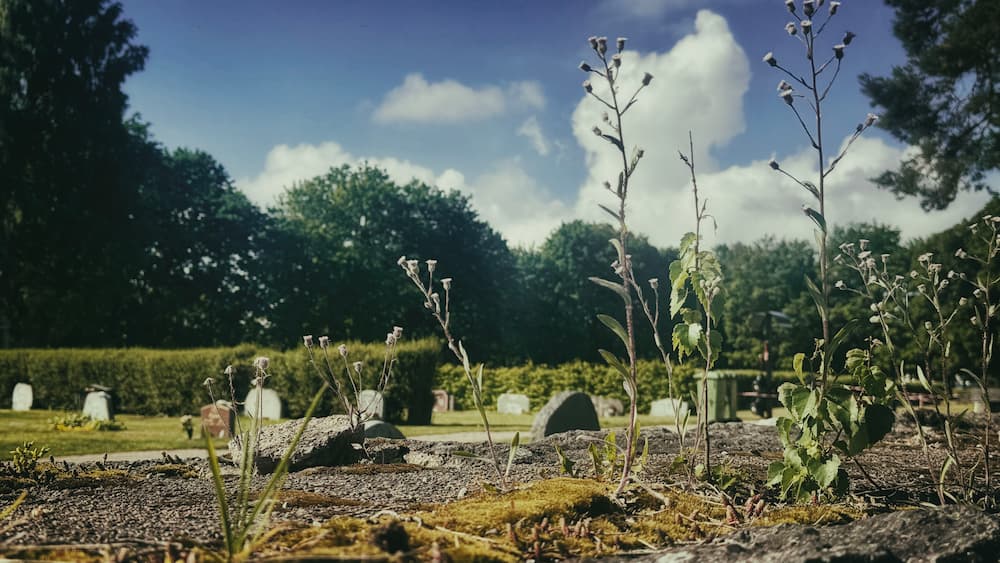
By challenging the traditional image of the strictly manicured and sterile cemetery, burial grounds across Sweden are increasingly being transformed into valuable refuges for biodiversity. It is a development that not only protects threatened species, but also reshapes how we think about the relationship between death, memory and ongoing life.
When people think of a cemetery, they often think of grief, silence and stillness. Yet behind the gravestones and old stone walls, active work is taking place to protect thriving ecosystems. In a society where nature is increasingly pushed aside by asphalt and urban expansion, Sweden’s cemeteries have unexpectedly become sanctuaries for wildlife.
The mosses and lichens growing on old gravestones, hedgehogs hibernating in piles of leaves and bees moving between grave plantings are not coincidences. They are the result of a conscious and fascinating shift in cemetery management.
A traditional institution at the forefront of conservation
Across several parts of Sweden, the Church of Sweden is now actively working to highlight and strengthen the ecological value of cemeteries. Through educational signs, targeted conservation projects and new maintenance practices, long-term initiatives have been launched to demonstrate how burial grounds can function as vital habitats for plants, insects, birds and small animals.
The work involves rethinking how shared public spaces are managed. Areas that were once considered untidy are now deliberately preserved. Light pollution is openly discussed. Species-poor lawns are being transformed into flowering meadows rich with life.
For visitors, it becomes a reminder that the cemetery is not only a place of memory, but also a place where life continuously continues.
Where time has been allowed to slow down
This conservation work rests on a unique foundation: continuity. The Swedish National Board of Housing, Building and Planning describes older cemeteries as valuable green cultural heritage sites where history, architecture and vegetation are deeply intertwined. In many Swedish towns and cities, cemeteries are among the oldest surviving continuous green spaces.
While surrounding urban and agricultural landscapes have changed rapidly, cemeteries have evolved slowly across generations. This slow continuity is precisely what many threatened species need in order to survive. Cemeteries have become part of a green infrastructure — a network of ecological refuges where nature is still allowed space within the city.
Life inside the welcoming stone wall
One concrete example of how historical heritage becomes living habitat can be found in old cemetery walls. Between the stones exists an entire microcosm. These walls provide stable humidity and softer temperature shifts — cooler in summer and warmer in winter.
Mosses and lichens grow slowly within the cracks, often requiring decades of undisturbed conditions. Snails seek shelter in the crevices, while frogs and lizards hibernate in the damp cavities.
Thanks to the preservation of these old walls, some Swedish cemeteries still provide habitat for rare snail species otherwise mainly associated with the limestone landscapes of Öland and Gotland. The walls also attract birds; species such as the northern wheatear use the tops of the walls as lookout points, while wagtails often build nests directly inside the cavities.
Gravestones as living historical documents
The gravestones themselves also support life that the Church of Sweden increasingly chooses to protect. Crustose lichens spread across older stone surfaces in shades of grey, green, yellow and orange. Many species grow only fractions of a millimetre each year and depend entirely on undisturbed environments.
New maintenance methods now often focus on cleaning only the inscription itself while leaving the surrounding stone untouched. In this way, unique ecosystems are preserved. The gravestone becomes more than a monument over a person — it also becomes a living historical document where nature quietly continues its work across centuries.
Lichens can even function as storytellers. By measuring lichen growth on stones of known age, researchers can estimate the age of older anonymous gravestones.
Dead wood replaces the sterile park
Perhaps the clearest symbol of this new approach is the changing view of trees and garden waste. Sweden today faces a severe shortage of old hollow trees in the wider landscape. In cemeteries, however, trees are increasingly allowed to age naturally and with dignity. Birds and bats nest inside the cavities, while sensitive mosses attach themselves to rough bark.
Even when trees die, standing dead trees are often preserved as biological monuments. This is essential for rare fungi and insects that depend on decaying wood habitats.
Piles of leaves, branches and logs are now also intentionally left behind as ecological shelters and feeding grounds. Material once removed from city parks is instead preserved within cemeteries. Beetle larvae develop inside decaying wood, while hedgehogs and amphibians find protected places for winter hibernation.
Even an old compost heap left undisturbed can become a thriving habitat for snails and invertebrates.
Meadows, wild bees and the protection of darkness
The transformation is also visible in open areas. More and more Swedish cemeteries are replacing intensely cut lawns with traditional meadow management. Grass is allowed to grow, flower and spread seeds until late summer before being cut.
The result is flowering meadows that become invaluable feeding grounds for butterflies, bumblebees and pollinating insects.
Open sandy areas are also deliberately preserved. Gravel paths, grave borders and sunny slopes provide nesting habitats for Sweden’s wild bees. Most of the country’s 276 wild bee species live alone and dig nests directly into exposed soil. Because open sandy environments elsewhere are disappearing, cemeteries have become increasingly important refuges for these insects.
Conservation efforts now even extend into the night. Two-thirds of Sweden’s invertebrates are nocturnal, and strong lighting around churches has been shown to harm species such as brown long-eared bats living in church towers. By shielding lights, using warmer tones and turning off unnecessary lighting during summer months, the Church of Sweden is increasingly protecting darkness itself as part of the ecosystem.
A comforting pattern
Cemeteries will always be associated with grief, loss and existential reflection. But through active environmental stewardship, these places have gained another dimension. They have become reminders that life does not pause at death.
Among silent gravestones and carved names, careful work for the future continues. Allowing places of mourning to also become places rich with life creates a beautiful and comforting cycle — where the memory of the dead becomes intertwined with the protection of the living.