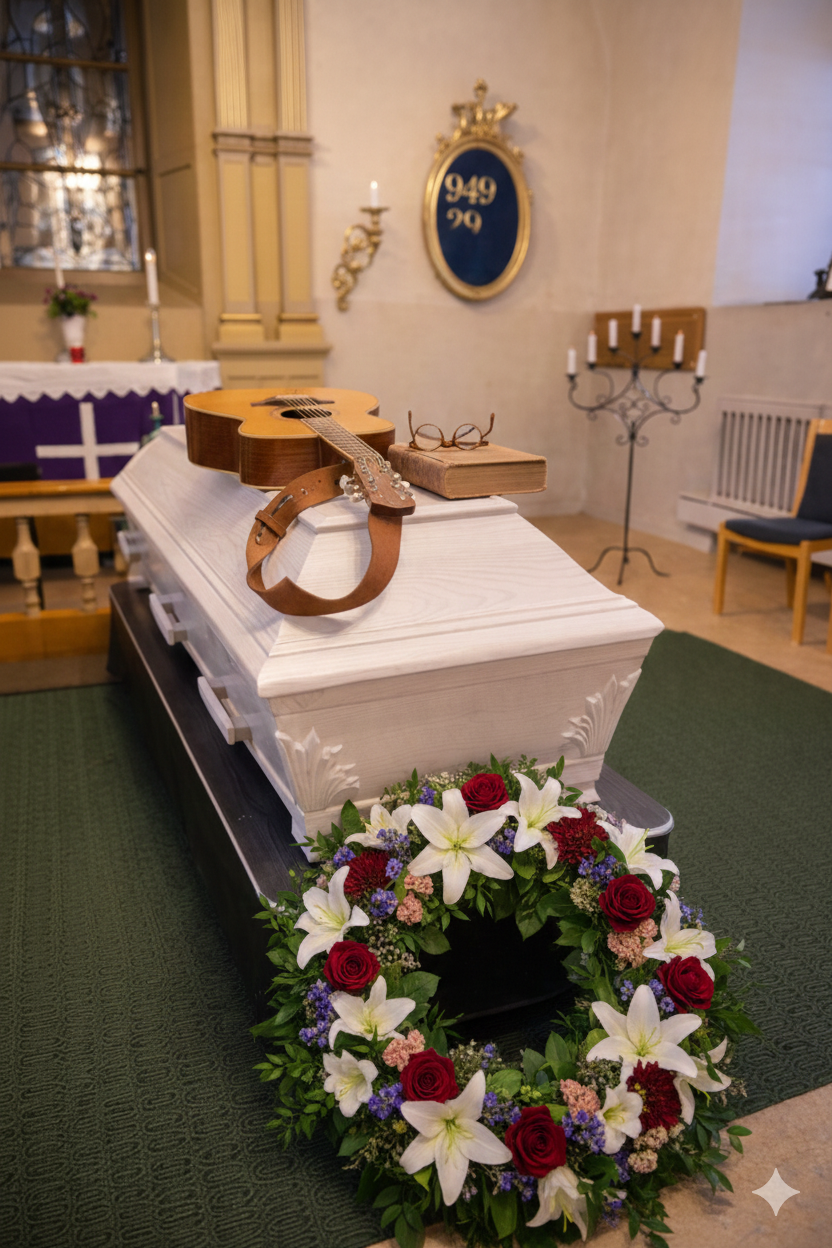
It might be a song that played every Sunday in the family kitchen. A flower from the garden, a photograph of a favourite place, or a story that instantly reminds everyone gathered of the person they have come to say goodbye to.
Often, it is the smallest details that make a funeral personal. Not necessarily elaborate arrangements or unusual elements, but things that capture something of who the person was.
Shaping a funeral around the life of the person who has died is nothing new. Yet as funeral traditions in Sweden evolve, questions of choice and personal wishes are receiving greater attention.
More people are choosing different ways to say goodbye
A 2021 Church of Sweden report, En ”riktig” begravning (A “Proper” Funeral), examined changes in Swedish funeral practices between 2010 and 2020.
Over that decade, the proportion of funerals conducted according to the Church of Sweden's rites fell from approximately 81 to 65 per cent. Meanwhile, the share of civil funerals rose from 8 to 14 per cent. Funerals with no known ceremony also became more common, increasing from 2 to 11 per cent.
These figures show that traditional forms of funeral services no longer hold quite the same position they once did. But they do not mean that people have stopped valuing ceremonies or the opportunity to say goodbye together.
A civil funeral can be just as solemn as a church service. And the absence of a formally recorded ceremony does not necessarily mean that family and friends have not gathered to remember the person in another way.
According to the report, the perception of greater freedom may help explain why some people choose civil funerals. At the same time, it notes that the scope for personal choices within a Church of Sweden funeral may be wider than many realise.
Music and memories give a ceremony its character
Music is one of the most recognisable ways to make a farewell personal.
A hymn may carry memories spanning an entire lifetime. For someone else, a folk song, a classical composition or a rock song may hold just as much meaning. Sometimes it is the music itself that brings memories back; sometimes it is the story of why a particular song mattered.
Eulogies and personal tributes can also give a ceremony its own character. A childhood memory, a familiar saying or a small everyday incident may reveal more about a person than a lengthy account of their life.
Photographs, flowers and meaningful objects can add to that personal atmosphere. Nothing needs to be elaborate. A single detail may be enough to make the person's presence strongly felt by those gathered.
The possibilities depend partly on the type of funeral and the venue. Civil ceremonies offer considerable freedom over their content, while Church of Sweden funerals follow an established liturgy that still allows for personal choices.
Many people think about their own funeral
Interest in shaping a final farewell is also reflected in how people think about their own death.
In a February 2025 survey conducted by Verian on behalf of Swedish funeral provider Fonus, 62 per cent of the 3,311 respondents said they had thought about what they wanted for their own funeral. Almost half, 47 per cent, considered it important to leave instructions for their relatives.
These wishes may concern anything from music and flowers to the type of ceremony and final resting place.
The survey also revealed openness to alternatives not currently permitted in Sweden. Nearly half of respondents, 49 per cent, said they could imagine having their ashes placed in a biodegradable urn together with a seed or plant, eventually becoming part of a tree.
This does not tell us how many would actually choose such an option if it became available. It does, however, show that people's ideas about their own farewell can extend beyond the choices offered today.
A personal ceremony begins with listening
For someone arranging a funeral, the number of decisions can feel overwhelming. There is music to choose, people to contact, practical arrangements to make and sometimes the wishes of several relatives to consider.
This is where funeral advisers and celebrants have important roles to play.
An adviser can help the family understand the available options and how they can be arranged. Through conversations with relatives, a celebrant can bring together stories and memories into a ceremony that conveys something of the person behind the name.
It is not simply a matter of choosing the right music or writing a moving tribute. Just as important is understanding what genuinely mattered to the person who died and which elements feel meaningful to their family.
Sometimes this leads to a ceremony with unusual features. At other times, the result is a traditional funeral in which a few carefully chosen details make the farewell deeply personal.
When personal wishes live on
Changing funeral practices show that there are more ways to arrange a final farewell than many people may once have imagined.
But greater choice also means more decisions for those left behind. If the person who died never expressed their wishes, the family may have to work out what they would have wanted.
Talking about your funeral in advance, or writing down a few simple preferences, can therefore help those who will one day arrange the farewell.
There is no need to decide every detail. It may be enough to mention the music you love, a place that holds special meaning or traditions you would like to preserve.
Because even as funeral customs change, the underlying purpose remains the same: to give someone a dignified farewell.
And the most personal ceremony need not be the one that differs most from others. It may simply be the one where every detail feels as though it belongs.