An old gravestone may be the last visible trace of a person's life. A name, two dates, perhaps a few words about an occupation or a family. To someone passing by, there is often little to suggest who that person was or what part they played in their community.
Yet cemeteries hold far more history than their inscriptions reveal. They contain the stories of people who built cities, founded businesses, created art and helped shape society. They also preserve traces of ordinary lives which, taken together, tell us how earlier generations lived.
In Sweden and Norway, efforts are under way to preserve this heritage and make the stories behind historic graves accessible to a wider public. The latest initiative comes from Trondheim, where a new digital service is opening a window onto the lives behind the headstones.
Trondheim hopes to take the stories nationwide
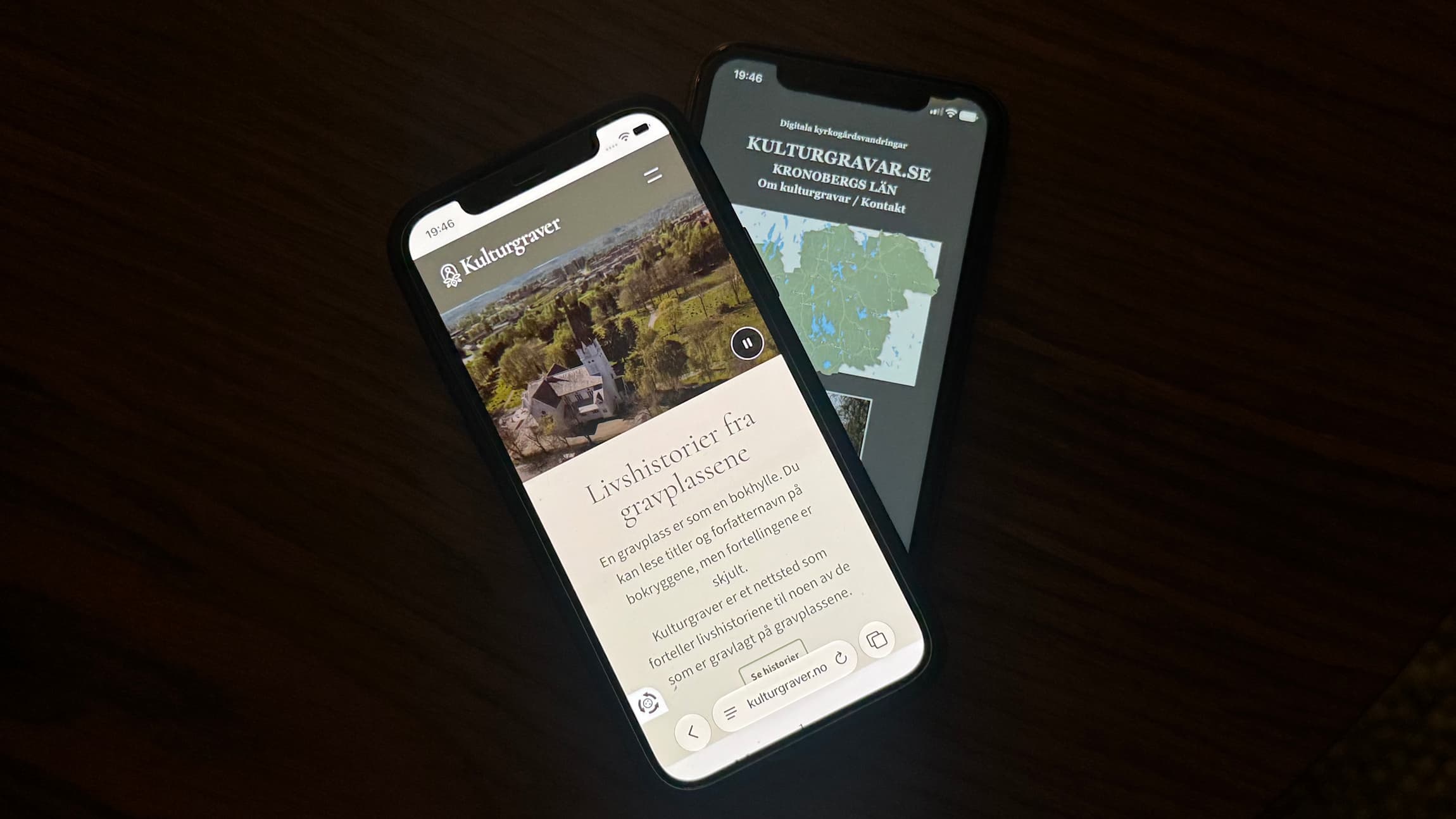
In October, Kulturgraver was launched following an initiative by the Church Council in Trondheim, Kirkelig fellesråd i Trondheim.
Using interactive maps, visitors can locate graves of historical interest and explore the lives of those buried there. The stories can be presented through written accounts, audio or video.
One example is the brewer Erich Christian Dahl, buried at Domkirkegården in Trondheim.
Dahl established his brewery in 1856, but his contribution to the city extended beyond brewing. Through his will, he helped establish a foundation supporting newborn children and women giving birth. A maternity institution bearing his name opened in 1908.
His grave offers a starting point for a much wider story about Trondheim and the people who shaped it.
The project is not intended solely to celebrate prominent figures. Less familiar lives can be equally revealing, offering glimpses of how communities once functioned and how they changed over time.
According to the Norwegian funeral industry publication Grav24, the Trondheim cemetery administration now hopes other burial authorities across Norway will join the initiative.
Sweden's Kulturgravar project dates back to 2017
The idea of using graves to tell local history is not new. In Sweden, the website Kulturgravar.se was established in 2017 following an initiative by Byarum parish in Småland.
It has since expanded to include digital cemetery trails across the country. By spring 2026, guides had been produced for nearly 140 cemeteries, according to the project's own figures.
The website is owned by the Swedish Cemetery and Crematorium Federation and helps parishes and cemetery administrations document and share the stories associated with historic graves.
Through interactive maps, films and audio recordings, visitors can discover selected burial sites and the people connected with them. QR codes at cemeteries can lead visitors to the material, which is also accessible from home.
Participating organisations include Church of Sweden parishes, the City of Stockholm and the Jewish community in Gothenburg.
In Linköping, the graves tell the city's story
One example can be found in Linköping, where the Church of Sweden has identified more than 400 graves of cultural and historical significance across the city's three cemeteries.
Some are valued because of the people buried there. Others are important because of the age of their memorials, their artistic design or the craftsmanship involved.
Around 80 graves have information signs. At Gamla griftegården and Norra griftegården, visitors can also follow digital cemetery walks, using maps to find selected graves and listening to stories about the people buried there.
Among them are the artist Johan Krouthén, the political figure Carl-Otto Mörner, known for his role in the selection of Sweden's future king, and the newspaper pioneer Isidor Kjellberg.
A walk through the cemetery thus becomes a journey through the city's past. The stories can also be explored without visiting the cemetery in person.
Why are some graves preserved?
Most graves are not intended to remain undisturbed forever. When burial rights expire, a plot may eventually be allocated again and its headstone removed.
Some graves and memorials, however, are considered historically significant enough to preserve even after the original burial rights have ended.
Swedish burial legislation contains specific provisions for memorials of cultural and historical value. When such a memorial has passed into the cemetery operator's care, it should, where possible, remain in its original location. If it must be moved, it should be preserved in a suitable place.
Norwegian cemetery authorities can also make decisions to preserve individual graves or entire burial areas for their cultural significance.
A grave does not have to belong to someone famous to matter. A headstone may reveal how people commemorated their dead in a particular era, demonstrate an unusual form of stone carving or preserve a fragment of local history.
There is also an important distinction between graves that have formal protection and those featured in heritage projects because their stories are worth telling. Inclusion in a digital cemetery trail does not automatically mean a grave has a particular legal status.
Stories that might otherwise be lost
The Swedish project demonstrates how much work has already been done to make cemetery heritage accessible to the public. Through Kulturgraver, Trondheim now hopes to develop a similar resource in Norway and invite more cemetery administrations to contribute.
The two services share many features, although they have developed in different settings. There is no established evidence of an organisational connection between them.
To a passer-by, the name on an old headstone may mean nothing. Yet behind it could lie the story of a person, a family or an entire city.
When those stories become accessible, the graves take on another meaning. They are not only memorials to those who have died, but reminders of the history still present all around us.