Losing a parent or sibling during adolescence can have profound consequences. Most young people gradually adapt to their loss, but for some, grief can contribute to longer-term mental health difficulties.
At the same time, traditional bereavement support does not reach everyone.
In a new doctoral thesis from Uppsala University, researcher Rebecca Rhodin investigated whether digital support could help adolescents who had lost a parent or sibling.
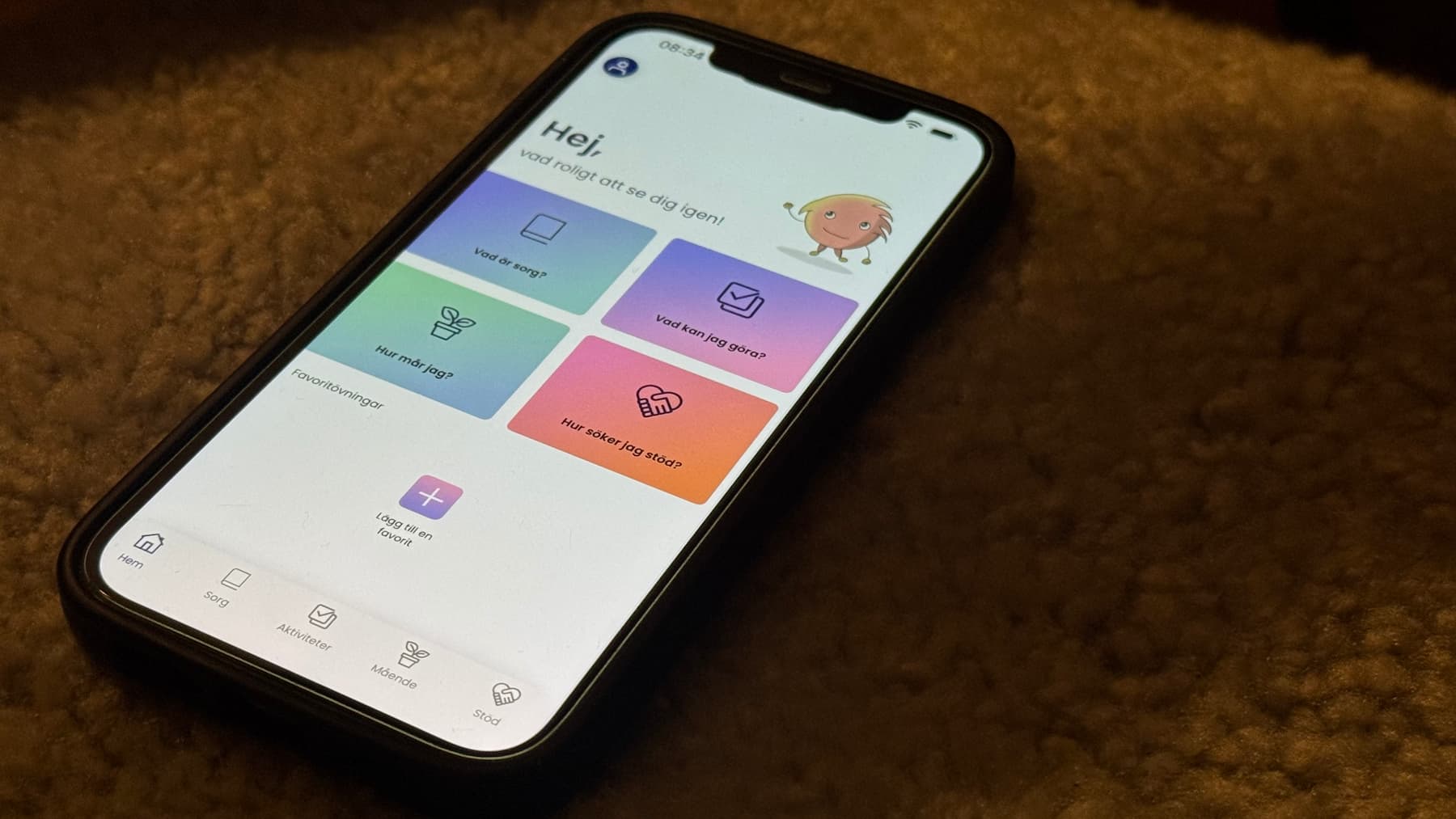
As part of the research project, the team developed Alba – Ung i sorg, a mobile app created together with young people who had experienced bereavement and the Swedish non-profit organisation Randiga Huset.
Alba is designed for young people aged 12 to 19 who have lost a parent and/or sibling.
The researchers then evaluated, step by step, how young people experienced the support and whether it could make a difference.
The results suggest that it can.
From six young people to a randomised trial
Work on Alba began in 2022, and the thesis comprises four studies. The support provided through the app draws on principles from cognitive behavioural therapy (CBT) and the concept of sense of coherence (SOC).
The first study involved developing the app together with six bereaved young people. This was followed by a pilot study involving 36 participants and an interview study with ten young people who had used the app.
The largest study was a randomised controlled trial involving 126 adolescents who had lost a parent and/or sibling.
It is this trial that provides the strongest evidence that digital bereavement support may make a difference.
Greater reductions in several symptoms
In the randomised trial, young people who used Alba were compared with an active control group.
Over time, those given access to the app showed greater reductions in grief reactions as well as symptoms of prolonged grief, post-traumatic stress and depression compared with the control group.
The findings therefore go beyond simply showing that young people found the app useful. They also point to improvements over time across several measures of grief and mental health.
That does not mean digital support will work for every young person or that it can replace professional care when such support is needed.
Support when young people feel ready for it
A central part of the project was involving young people with their own experience of bereavement in the development process.
Their feedback influenced both the content and design, and participants described their involvement in the development work as meaningful.
One advantage identified by the young people was being able to choose when, and at what pace, they wanted to engage with their grief.
Grief rarely follows a schedule. A young person may not feel ready to talk about their loss during a scheduled appointment but may need support late at night or several days later.
Digital support can therefore offer a different kind of accessibility from scheduled conversations.
Working with grief could also be difficult
Flexibility does not mean that digital bereavement support is always easy.
Young people described parts of the work in the app as emotionally demanding. Actively engaging with memories, emotions and the consequences of a loved one’s death can be difficult.
At the same time, participants described a better understanding of grief, stronger coping strategies, improved communication and a greater ability to make sense of their loss and its impact on their lives.
Effective grief support does not necessarily make someone feel better immediately. It can also provide a structured and manageable way of approaching something painful.
A complement, not a replacement
The findings do not suggest that an app can replace family, friends, healthcare professionals or therapy.
Instead, the thesis points to digital tools as another potential part of bereavement support, particularly for young people who may not want, or feel ready, to seek traditional counselling.
It also provides an interesting contrast to much of the recent discussion around technology and grief.
Considerable attention has focused on artificial intelligence, digital recreations of deceased people and AI companions. Alba represents something considerably less spectacular: using digital technology to help a young person understand and manage their own grief.
The research project was funded by Forte and the Swedish Cancer Society, and the studies were reviewed and approved by the Swedish Ethical Review Authority.
Rebecca Rhodin will defend her thesis, Bereavement support for adolescents in grief: Development and evaluation of a psychosocial self-management mobile app, at Uppsala University on 18 September 2026.