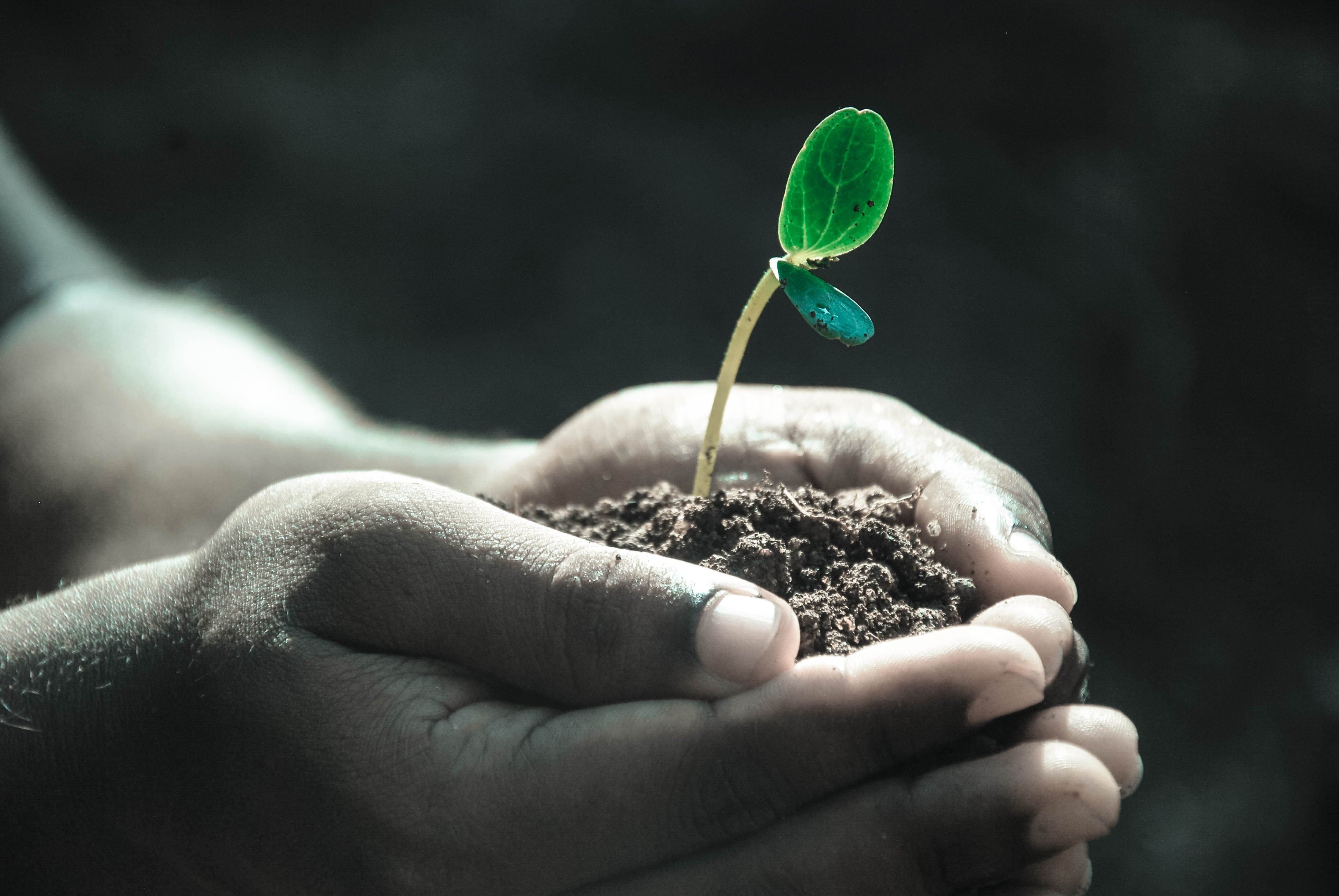
The idea of returning to the earth has long symbolised the cycle of life. But in parts of the United States, it has taken on a literal meaning.
Instead of being cremated or buried in a coffin, a deceased person's body can be placed in a specially designed vessel where naturally occurring microorganisms break down the tissues. After several months, what remains is a soil-like material that can be used to nourish plants.
The method is known as human composting, or natural organic reduction, and has emerged in recent years as a new option within the American funeral industry.
On 1 July 2025, a change in Georgia law came into effect permitting the practice. Georgia thus joined the growing number of US states making room for new ways of caring for human remains after death.
How human composting works
The process relies on the same biological principles as ordinary composting, but takes place under controlled conditions with specific requirements for handling human remains.
The body is placed in an enclosed vessel alongside organic materials such as wood chips, straw and alfalfa. By regulating oxygen, moisture and temperature, operators create conditions in which microorganisms can break down the body.
Decomposition generates heat and typically continues for several weeks. The resulting material must then undergo further treatment and curing before it can be used. The entire process generally takes between one and three months, depending on the facility and its methods.
The result is a soil-like material that may be returned to relatives or used in conservation projects, where permitted by law.
For some families, this carries particular meaning. The soil can be used for planting or scattered in a place that held special significance for the person who died.
Environmental arguments are driving interest
One of the principal arguments for human composting is its potential to reduce the environmental impact of funerals.
Cremation requires energy to reach the high temperatures needed for combustion. Conventional burials may involve materials and land use that also carry environmental costs. The scale of that impact depends on local funeral customs, transport and the materials involved.
Supporters of human composting point out that the process requires no incineration and allows organic material to be returned to the soil.
But that does not mean it has no environmental impact.
Facilities require energy, materials and transportation. The actual climate benefits therefore depend on how the process is carried out and what it is compared with.
Human composting should not be confused with natural burial, in which a body decomposes in the ground without the same technical process.
A new option, but one subject to regulation
Turning a human body into soil raises different questions from ordinary composting. These include infection control, pharmaceutical residues, identification of remains and testing of the finished material.
Special regulations are therefore needed for facilities offering the method.
Georgia's legislation covers matters including facility licensing, responsible personnel and documentation of how remains are handled. Legalisation does not mean that anyone may perform the procedure or that the resulting soil may be used without restrictions.
Regulation is an important part of the development. For human composting to become an accepted funeral option, both authorities and families need confidence that the process is safe and dignified.
When the environmentally friendly option is far away
Even where new funeral methods are permitted, accessing them can be difficult in practice.
In a personal article published by the Los Angeles Times in 2023, journalist Paul Thornton described his attempts to arrange an environmentally responsible funeral for his mother in California. Although he found a funeral provider offering green options, the possibilities proved limited.
Human composting was not yet permitted in the state and would have required transporting the body to Washington, where the method was already in use. The family ultimately chose a local cremation.
His account illustrates one of the challenges facing new funeral methods: an option that appears environmentally friendly may lose some of its advantages if it requires long-distance transportation.
California lawmakers have decided to permit human composting from 2027. The development shows how legal conditions are changing, but also how long it can take before new options become practically available.
A different way of understanding the final farewell
For people who choose human composting, the decision is not necessarily only about climate and resources.
The method can also offer a different relationship with what happens after death. Instead of ashes being kept in an urn, the material remaining from the body can become part of a garden, a tree or a natural landscape.
In an article published by the American organisation AARP, relatives describe using soil produced from their loved ones' remains to create new places of remembrance. For them, allowing something to grow has become part of the grieving process.
It is a way of remembering that differs from many established funeral traditions. At the same time, the idea of returning to nature is far from new.
What is new is that the process takes place using specialised technology and within a regulatory framework for funeral services.
With Georgia's legislative change, another American state has opened the door to this option. How significant a role human composting will play in the future of funeral services remains to be seen.
For those seeking a farewell with the smallest possible environmental footprint, the question is not simply whether a new method feels meaningful. It is also about how it works in practice, which alternatives are available and what their actual environmental impact may be.