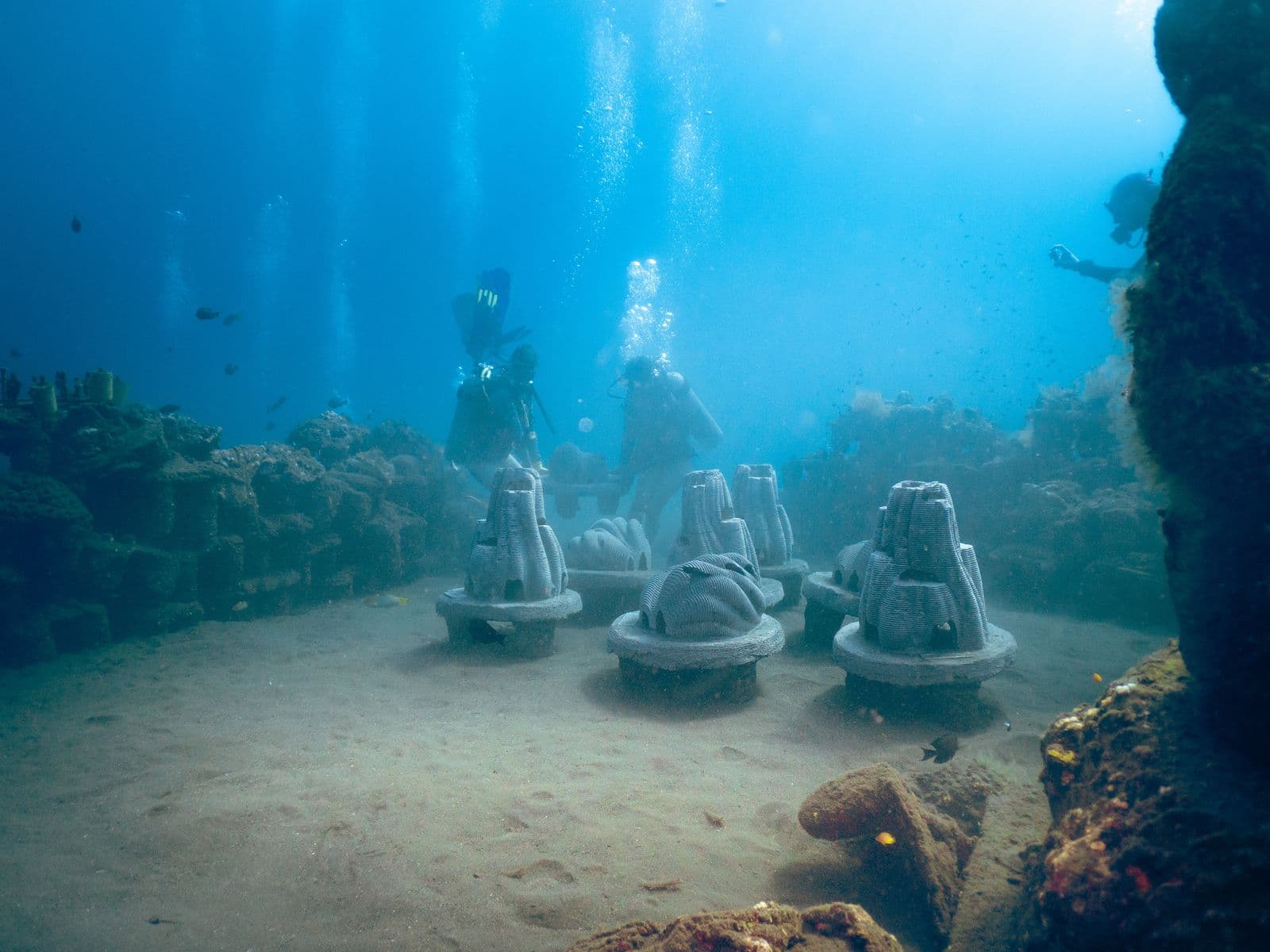
Around seven metres beneath the surface off the Indonesian island of Bali, something lies on the seabed that could, at first glance, resemble ordinary underwater formations. Fish swim between the structures, and their surfaces offer places for new marine life to take hold.
But these reefs have an unusual history. They contain the ashes of the dead.
The British company Resting Reef has developed a method of mixing cremated remains with other materials to create artificial reefs. The idea is to offer a final resting place that not only preserves someone's memory but can also become a home for new life beneath the waves.
From urn to underwater reef
Instead of placing the ashes in a traditional urn, they are incorporated into a specially designed reef structure. Its shape provides shelter for fish and surfaces where corals and other marine organisms can establish themselves.
The reefs are placed on selected areas of seabed where natural habitats have been damaged. One such site is near the village of Tulamben in northern Bali, where the marine environment has long been affected by practices including destructive fishing methods.
For families, the memorial becomes something that changes over time. Each reef has a recorded geographical location, and relatives can follow its development through photographs and videos. Those who travel to Bali can also visit the site by snorkelling or diving.
A resting place that changes with time
The idea challenges conventional notions of what a burial place can be. Instead of a headstone or an urn kept on land, the memorial becomes part of a living underwater landscape.
The technology has been developed in collaboration with SEA LIFE London Aquarium, where materials and reef structures have been studied to assess how they perform in marine environments.
But there are practical questions, too. Transporting ashes between countries, placing structures on the seabed and ensuring that the surrounding environment is not harmed all require permits and careful planning. And an artificial reef does not automatically benefit the environment simply because it attracts fish.
For many people, a grave close to home may also hold a significance that a distant reef could never replace.
Even so, the concept raises an interesting question about how we wish to be remembered.
A headstone remains in place, year after year, while the world around it changes. A memorial reef changes with it. New organisms take hold, fish find shelter, and something originally created to honour a life that has ended may gradually become part of life in the ocean.