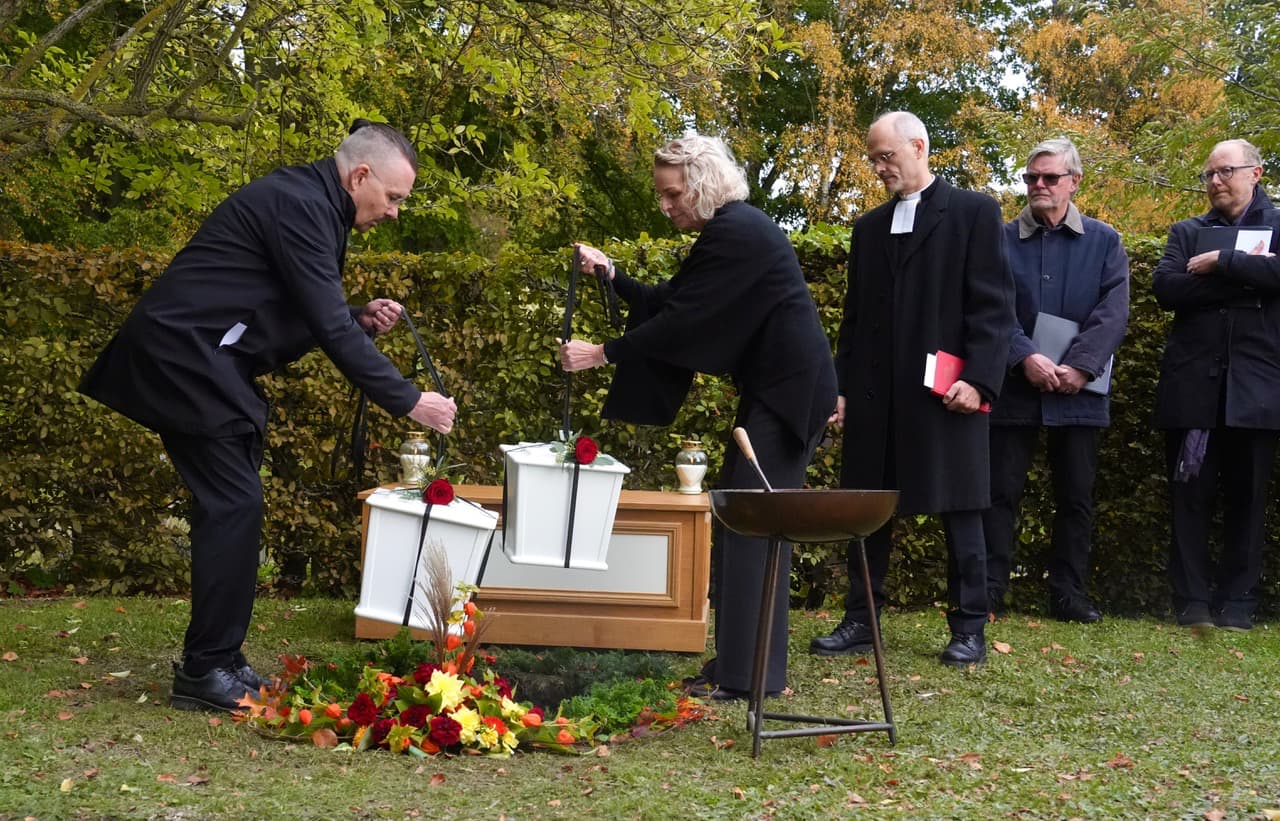
Two white urns were lowered into a grave at Norra Cemetery in Lund, southern Sweden. Inside were human remains that had been preserved in glass jars for decades — the last specimens from the Broman Collection.
On 13 October, Lund University held a farewell ceremony for the foetuses and stillborn babies once collected for medical research. They were buried in the cemetery's children's section, accompanied by choral music and speeches from university representatives.
“Farewell, little children,” Vice-Chancellor Erik Renström began his address, according to the university's account of the ceremony.
No evidence that the mothers were consulted
The story behind the burial dates back to the first half of the 20th century.
Anatomist Ivar Broman studied foetal development and built up an extensive collection through a network of doctors and midwives. Remains were sent from hospitals across Sweden, particularly in the southern region of Skåne. Between the 1920s and 1950s, more than 1,100 foetuses and children were collected.
But what did the women who had lost their pregnancies know about what happened afterwards?
According to Swedish broadcaster SVT's reporting on the university investigation, there are no records showing that the women were consulted. Nor is there any indication that doctors or midwives attempted to obtain their consent.
The absence of consent became a central issue when the university decided to close the collection. Maria Björkqvist, Dean of the Faculty of Medicine, described the original collection of the remains as unethical and deeply troubling by today's standards. The university did not want to perpetuate that violation by continuing to keep them.
The remains are buried, but the history is preserved
In 2025, Professor Bo Ahrén was commissioned to investigate the collection's history, scientific value and future.
By then, 234 specimens remained in 185 glass jars, including whole foetuses and stillborn babies as well as foetal body parts. The surviving material had not been used in research since the original collection period ended.
Photographs, preservation reports, letters and other documents have been retained. The investigation concluded that these records would be sufficient for future historical research, allowing the story of the collection to be studied even after the burial.
A farewell using the words of their time
The ceremony included music performed by the Sankt Johannes Chamber Choir. Hospital chaplain Olof Bråliden used an older funeral liturgy, chosen to reflect the period when the children would otherwise have been buried.
Vice-Chancellor Erik Renström spoke about the responsibilities of scientific research and the need to respect people's privacy, consent and dignity in the pursuit of knowledge.
He and Dean Maria Björkqvist then lowered the urns into the grave. A memorial stone is to be erected at the site.
“Dear children, you never had the chance to live your lives. Now we say goodbye. Farewell,” Renström said at the end of his address.